
The Motions

matthew-west40217

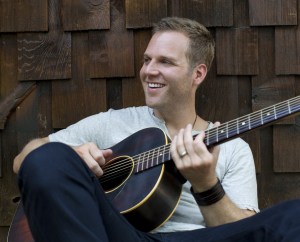
In May 2007, Christian music star Matthew West underwent vocal surgery that threatened his career as a singer.  The music video (see end of post) for his song, “The Motions,” shows West apparently voiceless in the time after his surgery, communicating via dry-erase board and asking questions like, “What if my voice sounds different?” and making statements such as, “I hate letting people down.”

The song isn’t new, but how appropriate it is for those of us who are hoping to make some changes in the new year!  The chorus is as follows:

I don’t wanna go through the motions
I don’t wanna go one more day
Without your all consuming passion inside of me
I don’t wanna spend my whole life asking
What if I had given everything?
Instead of going through the motions

The book of Malachi, which many church’s seem to have reduced to a book about tithing, seems to have a theme similar to that of West’s song.  It is a challenging and convicting piece of Old Testament prophecy that is both fierce and direct, bold and succinct.

At it’s core, I think Malachi is a call to give God our very best in everything, but that only happens after we realize that just going through the motions is not enough.

The prophet introduces us to an Israel that was under the illusion that they could just worship out of habit without putting any heart behind it.  They thought they were being obedient by offering sacrifices, but they failed to offer the cream of the crop that God had commanded them to give.  They offered crippled, blind, and even stolen animals as “sacrifices” to God, and in doing so failed to connect with the heart of God.

God challenges their thinking, and exclaims, “Try giving gifts like that to your governor, and see how pleased he is!” (Malachi 1:8) — Insert mic drop here!  In our context, the equivalent would be God saying something like, “Try giving the President of the United States half-eaten, stale birthday cake as a gift and see if he’s happy to receive it!”

Understand: Giving away your leftovers doesn’t require sacrifice.

God then takes things a step further when he says things like “How I wish one of you would shut the Temple doors so that these worthless sacrifices could not be offered!” and “Cursed is the cheat who promises to give a fine ram from his flock but then sacrifices a defective one to the Lord.”

The language is strong, but let’s take a step back and reflect.  As believers in Christ, Paul says we’re called not to sacrifice animals but to treat our lives as a “living and holy sacrifice” to God (Romans 12:1).  More than that, though, he writes that this sacrifice should be of “the kind he will find acceptable.”

So the question has to be asked: Am I giving God my best, or am I giving him my leftovers?  Is he getting the best of my time, the “first fruits” of my income, my best effort in service, and the whole of my heart in worship?  Or has my worship become nothing more than a habit, a series of things that I do because I’ve always done them before?  Am I just going through the motions?

God has given us his very best, and we’ll be blessed for offering our best in return.



Chasing Approval: What I Learned From “Chasing Tyson”

chasing tysonEvander Holyfield never got the credit he was due.  At least that’s the way ESPN Films’ Chasing Tyson (currently on Netflix) tells the story about the former heavyweight champ’s boxing career.

The film describes a world electrified by the phenom that was Mike Tyson.  Tyson was seen an unstoppable wrecking ball of a fighter, and between dominating his opponents and having famed boxing promoter Don King in his corner, Tyson achieved near legendary status.

Holyfield, on the other hand, was a talented athlete, but was quieter and didn’t have the swagger that Tyson and his crew had.  He was always in Tyson’s shadow, and though he wanted to face off with “Iron” Mike in the ring, their superfight was met by one delay after another, stretching out over the course of several years.

When Holyfield eventually won the heavyweight title, people largely acted as if the title had less value because it hadn’t been won against Tyson (Holyfield won the belt from Buster Douglas, who had shocked the world by upsetting Tyson not long before Tyson and Holyfield were supposed to square off).  In the years that followed, critics tried to force Holyfield to play the comparison game, as if he somehow was a lesser fighter because he hadn’t yet faced Tyson.  Nobody except Holyfield himself was willing to concede that “The Real Deal” was truly the best heavyweight in the world.  As Holyfield puts it in the film, “I’m chasing titles, I wasn’t chasing Tyson.”

The comparison game is dangerous.  Comparing ourselves to others causes us to constantly hunger and thirst for the approval of others, which can never ultimately satisfy us.

As believers in Christ, we have to constantly remind ourselves that there’s no need to work for the approval of men because we’ve already received God’s approval through the sacrifice of Jesus.  In Galatians 1:10, the Apostle Paul is blunt in saying that he doesn’t chase human approval.  He writes,

“If pleasing people were my goal, I would not be Christ’s servant.”

Well then, that’s about as to-the-point as you can get.

Those who aspire to please Jesus cannot simultaneously try to please people.  There are too many conflicting ideals.  That’s not to say the Kingdom of God should clash with everyone all the time, just that others’ standards are not those by which we should measure our success.

Evander Holyfield eventually fought, and beat, Mike Tyson…twice. But even still, there seems to be some doubt as to who was the better fighter. After all, even the documentary about Holyfield’s career is named after Tyson! Don’t play the comparison game. You’ll only end up chasing others’ approval.

A Happy Right-Hand Man

I’ve always been a right-hand man.  Growing up with an older brother, I was almost always an accomplice and very rarely the mastermind.  Whether it was playing in the yard or playing video games, I often played a supporting role and very rarely was the hero.

I remember, in particular, playing Sonic 2 on the Sega Genesis and waiting and wishing for the chance to play as Sonic.  Most often, however, I got stuck being Tails — Sonic’s flying fox friend who was able to offer little support and could actually be left behind by the game’s namesake.

SonicBut then Sonic 3 came out, and in that game Tails became much more important to helping Sonic succeed.  He was still in a supporting role, and he could still be left behind (or dragged along), but he suddenly had the ability to pick up Sonic and fly him to places that would have been difficult for him to reach on his own.  Because of this, there were times where my brother would make Sonic wait so Tails and I could help him with a difficult task.  Tails finally felt his worth (and I felt what it was like, maybe for the first time, to be in a fulfilling, supporting role).

As a student pastor I’ve experienced this same fulfillment in the church, too.  I’ve embraced being a right-hand man to the senior pastor because I sense that I’m really making a difference in my role.

Listen: You don’t have to make all of the decisions in your family, business, or church to make a difference.  Instead, if you’re a right-hand man, make it your goal to be a person of indispensable influence on the people around you (including those who lead you).  You don’t have to be the guy in charge to make an impact.

John the Baptist exampled this philosophy well.  He was a natural (or supernatural) leader, drawing tons of people to himself to be baptized.  Isaiah even prophesied about John’s coming and purpose in the Old Testament, and John was so intriguing it appears some people even wondered if he was the Messiah!

Yet, when Jesus stepped on the scene, John willingly stepped back from it.  On one occasion recorded in John 3, the disciples of John appear to be jealous that people are now going to Jesus for baptism instead of coming to them.  John responds in a way that shows he’s embraced his supporting role:

27 John replied, “No one can receive anything unless God gives it from heaven.28 You yourselves know how plainly I told you, ‘I am not the Messiah. I am only here to prepare the way for him.’ 29 It is the bridegroom who marries the bride, and the best man is simply glad to stand with him and hear his vows. Therefore, I am filled with joy at his success. 30 He must become greater and greater, and I must become less and less.

John was a great man, a bold speaker, and a strong leader, but he realized what was best for the Kingdom was for him to take a step back and make sure Jesus rightly received his glory.

Let’s make it our goal to do the same.  Let’s work and pray to set aside our pride for the benefit of the Kingdom and the magnification of Jesus.  Let’s find joy in that work, and know that you can have a great impact even when you’re not calling all the shots.

The Great Motivator

When I first met my wife’s great grandma, she was 91 years old.

She lived on her own in the hills of Kentucky well into her nineties, and she was an even balance between tough and tender.  She was loving and sweet (her first words to me were, “Well, aren’t you just tall and handsome”) but had a funny and sarcastic side to her as well (she’d often lean over to me at the dinner table and whisper some snarky remark into my ear).

I have a number of fond memories of her.  When we’d stay at her home, for example, she would be the first one out of bed and would start banging every pot and pan in the house together while making breakfast (presumably to make sure all of us were awake by the time it was ready).  I also remember watching her overflow with genuine gratitude as she unwrapped a simple coffee maker at Christmas (it showed me I have much to learn about gratitude).

Mamaw, as we called her, really made me feel like a part of the family, even before my wife and I were married.  Now, I don’t know if you’ve ever had the privilege of spending time with someone of that age, but whenever we visited her we did so with the understanding that any visit could be our last.

But, because she was so tough, she lived several years longer.  When Mamaw was 100 years old, my wife found out she was pregnant.  When we told Mamaw she got the biggest grin on her face, and in the months that followed all she could talk about was how she couldn’t wait to hold that baby.  We couldn’t wait either, but as she got older her health issues seemed to be a more frequent nuisance, and we often wondered if our child would get to meet his great great grandmother.

Then, not long before our son was due, she had a stroke.

She survived it and started her recovery in a nursing home, though no one could say whether or not she would fully recover.  Then, in November 2014, our son Micah was born, and not long after that we visited the nursing home and Mamaw got to hold her great great grandson for the first and last time.

She died on Christmas Eve just a few weeks later.

There are a lot of factors that determine when a person is going to die, but my wife and I believe Mamaw may have died much sooner if she hadn’t held on to the hope that she’d get to meet our child.

There is Hope - COVER SLIDEHope — the idea that there is an unseen future that is greater than our visible present — is a force that tells us to keep on going when everything else is telling us to give up.  True hope, though focused on the future, affects our present in powerful ways.

The problem with hope today is its definition has become weakened by the way it is commonly used.  Most people use hope to describe a type of wishful thinking, but the hope described in the Bible is one of confidence and assurance.  It’s a looking forward to heavenly promises that have been made by a reliable God who has time and time again put his faithfulness out there for all to see.

So this Christmas season, don’t lose hope!  Keep your eyes fastened on Jesus, the hope of the world.  Those in the Old Testament were motivated by hope in God’s plan to rescue the world, even though they didn’t get to see it materialize in their lifetimes.  But today Jesus is on his throne, and we have reason to hope confidently for all of the things he’s promised for the future, because he’s a man of his word.

Correction: In an earlier edit I said Mamaw was 95 when we met, but my wife corrected me.  She was (only) 91!

Listen to the Critics!

image

Statler and Waldorf, everyone’s favorite Muppet Show critics.

I think one of the toughest things to do as a human being is take criticism well.  Pride is very much a part of our nature, it’s a mask that we think can hide us from hurt, and receiving criticism requires us to take off the mask.

But take off the mask we must. That’s why popular mantras that call us to ignore the critics are not, in my opinion, entirely helpful. No, I’m not saying you should let the opinions of Internet trolls and everyone else you know rule your life. What I am saying is if you don’t at least consider the views of your critics you’re missing out on an opportunity to learn. And if you’re not learning, you’re not growing.

Proverbs 29:1 says this:

Whoever stubbornly refuses to accept criticism will suddenly be destroyed beyond recovery.

I recently read through the book of Proverbs, and that is one of the only times the sudden destruction-type language comes into play. Isn’t that radically different from the popular wisdom of the world?

This is so important to me because I generally don’t take criticism well. I work hard and have generally always been good at what I put my mind to. Things that are difficult for others have been, by God’s grace, been made easy for me, so when someone comes at me with a critique of my work I tend to get defensive instead of receptive.

It’s also important to me because I don’t want to be suddenly destroyed. I don’t think Proverbs 29 is necessarily saying that God is going to execute some sort of divine judgment on you if you ignore a comment about how you shouldn’t wear navy blue workout pants with a black t-shirt (my wife may or may not have criticised me about this once).

No, I think it just means that people who don’t take criticism well are proud, and pride comes before the fall.  If I ignore financial criticism, my finances will suffer. If I ignore my wife’s criticism, our relationship will suffer. If ignore criticism in the church, my ministry will suffer. If I ignore spiritual criticism, my relationship with Jesus will suffer.

How do you react when you’re criticised? What areas of your life do you get most defensive about? Approach criticism with humility, because if you do it’ll sharpen you instead of harm you!

Love is…etc.

1 Corinthians 13 is probably one of the most well-known passages in the Bible.  It’s been read aloud at countless weddings, printed on bookmarks, and sewn into pillows.  It was even the subject of a bet between Owen Wilson’s and Vince Vaughn’s characters  in the movie Wedding Crashers.

The passage I’m referring to is the one in which Paul spells out the definition of love — “Love is patient, love is kind…”  We’ve all heard it, but that might be part of the problem.  It’s become such a familiar part of our culture that its details have become lost.  It’s an invaluable gem hiding in plain sight.

I really began evaluating my personal definition of love a few months ago when night after night I left work with a whole lot of stress and just a little patience.  I was overwhelmed, and to my family I constantly seemed tired and irritable.  Even worse, at times I even made them feel like they were the cause of my irritation.  I would look forward to seeing my wife and son all day, but by the time I walked through the front door the wick on my candle was all but burned out.

"Love is patient..."

“Love is patient…”

Then God hit me with just a single piece of the love passage — “Love is patient” — and it convicted me.  It’s so easy to say you love someone, but when your actions are suddenly challenged by God’s standards it’s a humbling experience.  Suddenly I didn’t see 1 Corinthians 13 as a pop culture reference, but rightfully as the Word of the God who is love personified.

And he is loving.  What’s one way I know?  He’s patient with me.  Like a good dad who doesn’t respond harshly to every immature thing his children do, God waits out my failures and patiently teaches me to be more like him.

So what’s your definition of love?  Take some time to read 1 Corinthians 13 and evaluate your own standards to see how well they align with God’s.

Learning from Literature

image

Moby Dick

One thing my friends and family know about me is that I’m not just a Faith Nerd, but I’m a literature nerd too. So I absolutely love it when the two passions meet, as they do in the following quote from Herman Melville’s Moby Dick:

Yes, there is death in this business of whaling- a speechlessly quick chaotic bundling of a man into Eternity. But what then? Methinks we have hugely mistaken this matter of Life and Death. Methinks that what they call my shadow here on earth is my true substance. Methinks that in looking at things spiritual, we are too much like oysters observing the sun through the water, and thinking that thick water the thinnest of air. Methinks my body is but the lees of my better being. In fact take my body who will, take it I say, it is not me.

What book quotes get you thinking about your spiritual life?

Busy Lazy


I recently made a horrifying discovery while reading the book of Proverbs: I’m lazy.

It’s not surprising I didn’t notice it before.  The L-word was hidden behind a Google Calendar that is so packed with meetings, programs, and phone calls it looks like an old-school game of Super Breakout.  Yet when I read Proverbs I get the sense that avoiding laziness has less to do with filling a calendar and more to do with how I use the time I’ve been given.

lazy busy breakout google calendar

Sometimes my Google Calendar looks like a game of Super Breakout.

For example, Proverbs 12:27 advises, “Lazy people don’t even cook the game they catch, but the diligent make use of everything they find.”  I’m not a hunter, but I suspect this verse is about more than food.  I think it’s about following through, and being thorough in everything I do, though if I’m honest I have a tendency to set my work aside once the easy part’s done.  I set it aside and say “I’ll finish this up tomorrow” and convince myself I’m not being lazy because I’m moving on to another project.

So I’m not always lazy, I guess, but that’s exactly why such a deficiency has hidden in my blind spot for so long.  I’m selective in my laziness. I’m busy lazy.

Another convicting passage for me is found in Proverbs 24, where the text describes a wise man’s view of a dilapidated vineyard owned by a lazy person.  The vineyard is covered in weeds and its walls are crumbling, and the wise man concludes: “A little extra sleep, a little more slumber, a little folding of the hands to rest—then poverty will pounce on you like a bandit; scarcity will attack you like an armed robber.”

What powerful imagery!  Do I want to be stripped of everything because I’m too lazy, or too disorganized, to maintain that which I’ve been blessed with?  I’m much better at starting new things than maintaining that which I’ve been given, and that’s not only bad stewardship, it’s flat-out lazy.

So I’m grateful for God’s grace, which reminds me that I have the opportunity to repent of my laziness, not so I can fill my calendar even more, but so I can make the most of the time He’s given me.  I’m grateful that the wisdom of Proverbs still reveals the foolishness of my heart nearly two decades into my relationship with Christ.  And I’m grateful that though my work sometimes go unfinished,

I serve a God who “began the good work within [me]” and “will continue his work until it is finally finished on the day when Christ Jesus returns” (Philippians 1:6).